

MicroPrime MP90
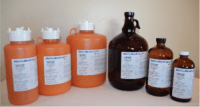
Product Description
MicroPrime MP-90 Adhesion Promoter is a blend of hexamethyldisilazane and N,N-diethylaminotrimethylsilane (HMDS (99.0%) and DEATS(0.1%) (CH3)3SiNHSi(CH3)3/(CH3)3SiN(C2H5)2. Shin-Etsu’s adhesion promoters are used to enhance the bonding of photoresist to a silicon dioxide surface.
Product Characteristics
- MP-90 is optimized for efficient, high H2O contact angle, vapor priming on semiconductor in-line track coating equipment.
- The combination of DEATS, an aminofunctional silane, with HMDS provides a more highly reactive surface treatment to reduce photoresist lifting on common semiconductor surfaces including silicon, poly, oxide nitride, Silicides and BPSG.
- MicroPrime MP-90 Adhesion Promoter is completely compatible with
Application
MP-90 can be applied to oxide substrates by several
techniques, including vapor prime, spinning and spraying. Environmentally stable primed substrates with uniform coverage are obtained by treatment in vapor deposition tracks and ovens. This efficient method of application offers rapid and uniform reproducible priming of substrates with a minimum quantity of MP-90.
Apply a small amount of MP-90 neat to a wafer spun at 3000-5000 rpm at ambient temperature. Pre-bake at 70-150°C. Post-exposure bake at 70-150°C.
This aminofunctional, low viscosity organosilane is more reactive with the hydroxyl radicals on silicon dioxide than hexamethyldisilazane (HMDS). Therefore, use of MP-90 results in greater coverage and more efficient surface treatment in a shorter time.
Reaction Mechanism
- MP-90 reacts readily with silicon oxide surfaces (metal oxides, silicon dioxide, etc.) removing adsorbed water and reducing substrate surface energy.
- Further reaction then occurs between MP-90 and surface hydroxyls (silanols, metalhydroxides) resulting in a trimethylsiloxylated surface and prevention of future adsorption of water and other polar materials. During this process small amounts of diethylamine and ammonia are produced.
- MP-90 functions as a surface modifying agent. Photoresist will then coat these surfaces more uniformly; problems of photoresist lifting and subsequent undercutting are reduced.
- MicroPrime MP-90 Adhesion Promoter is designed and recommended for track vapor priming in semiconductor lithography processes.
Specification Data
| Purity, Min | ≥ 99.0% |
| Residue, Max | ≤ 3.0ppm |
| Chloride | ≤ 0.5ppm |
Attributes And Typical Values
| Attributes | Typical Values |
|---|---|
| Density, 25° C | 0.769 |
| Boiling Point | 126° C |
| Flash Point | 10° C |
Typical Elemental Impurities
| Al | Aluminum | <5.0 ppb |
| As | Arsenic | <5.0 ppb |
| Au | Gold | <5.0 ppb |
| Ca | Calcium | <5.0 ppb |
| Cu | Copper | <5.0 ppb |
| Fe | Iron | <5.0 ppb |
| K | Potassium | <5.0 ppb |
| Na | Sodium | <5.0 ppb |
| Pb | Lead | <5.0 ppb |
| Sb | Antimony | <10.0 ppb |
How To Use
Cautions in Handling
Hexamethyldisilazane and N,N-diethylaminotrimethylsilane can cause severe burns to eyes and skin. In case of contact with the eyes, immediately flush with water for at least 15 minutes and get prompt medical attention. In case of skin contact, flush with water, wash with soap and water, and contact a physician. The material should be handled only in areas with adequate ventilation to avoid excessive exposure to solvent vapors.
Contact with moisture will produce hexamethyldisiloxane, ammonia and diethylamine.
N,N-diethylaminotrimethylsilane is a flammable, corrosive liquid.
In the event of fire, use dry powder or CO2 for small fires, foam for large fires. Avoid direct streams of water.